
Wonder Tales Coloring Book
LoveColoring GameBoard
4.9141.00 Reviews
- Version
- 1.0.7
- Installs
- 100.00K
- Age Rating
- Everyone
Screenshots
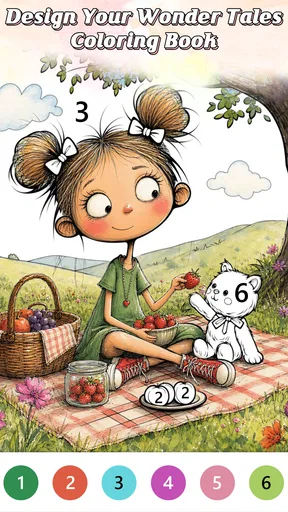
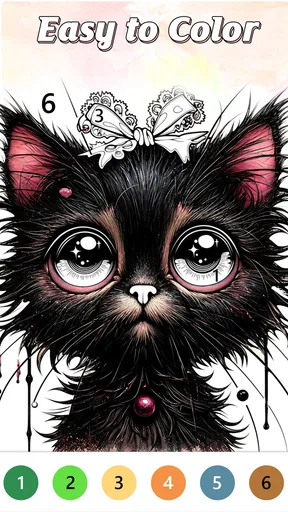
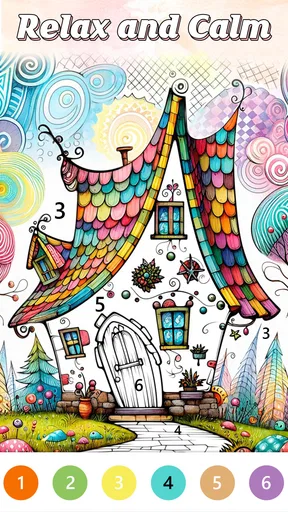
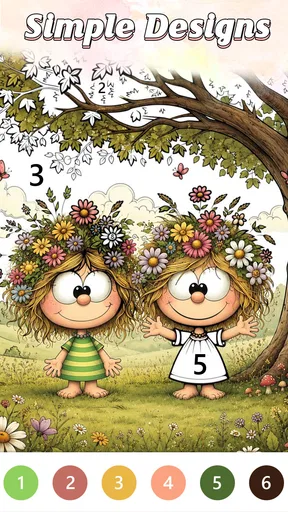
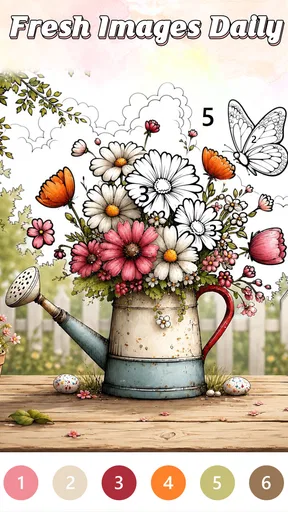
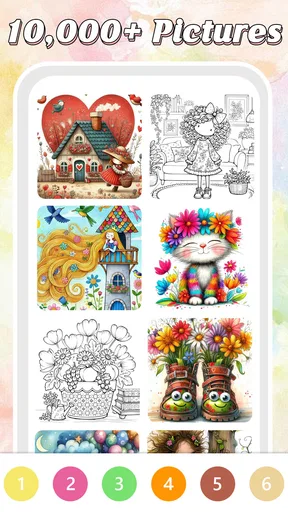
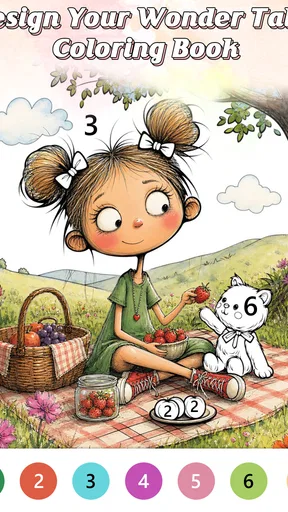
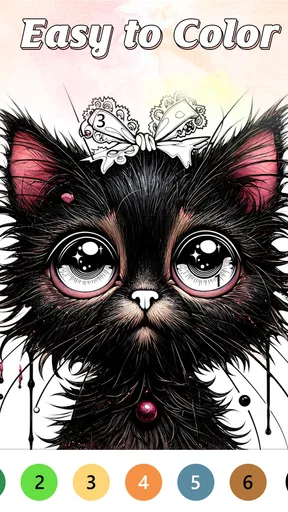
Our Review of Wonder Tales Coloring Book
 Analysis by Appyee
I spent time with Wonder Tales Coloring Book as a quiet, low-pressure board game rather than a traditional competitive title. Its main appeal is simple: choose an illustration, tap the numbered areas, watch the picture fill with color, and decide whether the finished page is enough or whether I want to start another one. That straightforward rhythm makes it easy to pick up when I have only a few minutes and equally easy to leave when I want a break.
What makes the experience pleasant is the lack of urgency. I am not racing a clock, managing a complicated inventory, or trying to beat another player. The focus stays on matching colors to numbers and gradually turning an unfinished picture into something complete. The game comes from LoveColoring Game and is free to start, with optional in-app purchases ranging from $0.99 to $9.99 per item. It is rated for Everyone, so the tone is approachable for children and adults alike, although younger players may still benefit from an adult explaining the controls at first.
How the coloring loop feels from the first tap to the next picture
I find the first few taps useful for judging whether this game’s gentle, repetitive pace suits me: the numbered areas offer a clear next move, but the pleasure comes from following that pattern rather than making strategic choices. I also pay attention to how comfortably I can spot the remaining sections, since that can shape whether a short session feels calming or fiddly.
The first action is deliberately easy
The first useful thing I noticed is how quickly the game gets me to the actual coloring. There is no need to learn a long rule set before making progress. I choose an available image and look for an area marked with the current number. A tap fills the matching section, and the picture begins to change immediately.
That first action matters because it establishes the game’s personality. This is not a board game built around planning several turns ahead. It is closer to a guided coloring activity presented through a game interface. The numbered areas give me a clear next step, which is helpful when I want to relax without having to decide what to draw or which color combination might work.
The controls are especially suitable for short sessions on a phone. I can use one hand, pause naturally, and return to the same page later. The interaction is repetitive by design, but the repetition has a purpose: each tap removes a small piece of visual uncertainty. An empty section becomes colored, and the larger image becomes easier to understand.
I would not recommend approaching it expecting the freedom of a full digital art program. The numbered format guides the result, so there is less room for personal brushwork, shading, or experimentation. For me, that limitation is also the reason it works as a calming game. I do not need to make artistic decisions at every step, and I cannot accidentally ruin the composition with an unwanted stroke.
The feedback rhythm keeps the page moving
The strongest part of the experience is the feedback rhythm. I tap a numbered area, receive an immediate visual change, and then search for the next matching space. That small cycle repeats often enough to create a steady flow without becoming demanding. When I am mentally tired, having one obvious action in front of me is more comfortable than opening a game that asks me to manage several systems at once.
The rhythm also gives the game a gentle sense of progress. At the beginning, the image may look fragmented, with many small areas waiting for attention. After several correct taps, larger shapes become recognizable. I can see the page developing even before it is finished, which encourages me to continue without needing a formal challenge or competitive reward.
There is a practical tip here: I found it better to work through one number at a time instead of trying to color areas in visual order. Searching for every matching section creates a predictable routine and reduces the feeling of constantly switching between colors. It is a small change, but it makes longer pages feel more manageable, particularly when the remaining spaces are tiny.
Another useful approach is to treat the image as a short sequence of attention exercises. I can focus on larger, obvious areas when I want quick progress, then handle the smaller details when I have more patience. This gives me some control over the pace even though the game determines the color assignments.
The reward is completion, not competition
The central reward is seeing an unfinished illustration become a complete piece of color-by-number art. That may sound modest, but it is exactly what makes the game relaxing. The satisfaction comes from closing small gaps and reaching a finished page, not from defeating an opponent or chasing a difficult score.
I also like that the completed image can feel like a small personal record of time spent unwinding. The store summary presents the game as a way to relax with free color-by-number art and create a dreamy journal, and that journal idea fits the experience better than describing it as a conventional puzzle challenge. Each finished page can mark a mood or a quiet moment, even though the game does not turn that process into a demanding diary routine.
For a realistic everyday use case, imagine finishing work or school with ten minutes before dinner. A competitive game might leave you more alert, while a creative app might require too much concentration. Here, I can open a page, complete a handful of sections, and stop without feeling that I abandoned a complicated task. If I have more time, I can continue toward completion and enjoy the stronger payoff of seeing the whole design finished.
The reward is less suitable for players who need constant novelty. There are no signs in my experience that the core pleasure comes from strategy, social competition, or mastering increasingly complex rules. Someone looking for a deep board-game system should choose a traditional digital board game instead. Someone who wants a quiet visual routine will understand the appeal much faster.
Resetting the session is part of the appeal
One reason I can return to this game is that each new picture acts like a clean reset. Once I finish an image, the next session does not require me to remember a story, rebuild a strategy, or recover from a previous mistake. I simply begin another coloring task with the same familiar sequence: identify, tap, watch, repeat.
This reset makes the game useful in different moods. I can use it as a short distraction by completing only a few sections, or I can settle into a longer session and finish a page. The same interface supports both habits because the commitment is flexible. There is no pressure to treat every launch as a major play session.
A practical limitation is that the reset can also make the experience feel similar from one session to the next. The pleasure depends on enjoying the act of filling areas, not on discovering a new mechanic each time. If I were choosing a game for a long journey and wanted a changing campaign, this would not be my first choice. I would look toward a story-driven game or a more complex puzzle title.
It is also worth thinking about purchases before settling into the catalog. The game is free, but optional items cost between $0.99 and $9.99 each. That does not prevent trying the basic experience, yet anyone who becomes attached to collecting artwork should keep the purchase model in mind. I prefer to play the free content first and decide later whether additional items genuinely improve my routine.
Where it fits among coloring and board-game alternatives
Compared with a blank-canvas coloring app, this game is more structured and less intimidating. A blank canvas gives me complete control, but it also asks me to choose a palette, decide where to work, and accept responsibility for the final result. Wonder Tales Coloring Book removes those decisions through numbered areas, which is better when I want guidance rather than artistic freedom.
Compared with a conventional digital board game, it is much lighter. There is no need to learn a board layout, calculate moves, or anticipate another player’s response. That makes it a poor substitute for chess, checkers, or strategy-focused board games, but a good alternative when I want the visual calm associated with a board-style activity without the competitive pressure.
It also differs from timed puzzle games. Those games often reward speed and accuracy under pressure, while this one rewards persistence and completion. If I make a mistake or lose focus, the experience does not become a stressful recovery exercise. The trade-off is that players who enjoy fast feedback tied to a score may find the coloring loop too gentle.
The game’s average rating is 4.9 from around 3.1 thousand ratings, and it has passed 100 thousand installs. Those figures suggest that the simple format has found an audience, but they should not be read as proof that every player will enjoy the repetition. The right question is whether you want a guided coloring activity or a more traditional game with stronger challenge and variety.
Small habits that make the experience better
My first tip is to use the game as a transition rather than an obligation. Opening it immediately after a demanding task gives the mind a narrow, repeatable action to follow. I would avoid turning every page into a completion target, because the pressure to finish can undermine the relaxed mood that makes the game worthwhile.
My second tip is to stop at a natural visual milestone. If a major section has just been completed and the image looks noticeably clearer, that can be a satisfying place to pause. This is useful for children with short attention spans and adults who want a brief break without losing the feeling of progress.
My third tip is to judge the game by the quality of its routine, not by the complexity of its feature list. The numbered coloring system is intentionally narrow. Its strength is that it removes friction between opening the app and doing something calming. Its weakness is that it cannot provide the same creative ownership as freehand coloring or the same intellectual demand as a strategy board game.
Families may find the Everyone rating reassuring, and the simple controls are approachable for a wide age range. Still, I would supervise younger children around optional purchases, especially if they enjoy browsing additional content. The game itself is easy to understand, but purchase decisions are a separate matter and are best handled deliberately.
Device fit, access, and everyday practicality
The current version is 1.0.7 and it supports devices running Android 8.0 or later. That makes it accessible to many Android users, although anyone with an older phone or tablet should check compatibility before planning to use it. The game is free to download, so trying the basic loop is less of a commitment than buying a premium title upfront.
I would choose a phone for quick sessions and a larger screen when I want to inspect small numbered areas more comfortably. Tiny sections are part of the visual challenge, and screen size can affect how pleasant that work feels. If you have trouble distinguishing small spaces, the game may become more tiring than relaxing during long sessions.
The developer, LoveColoring Game, has positioned the title around accessible color-by-number play rather than a complicated board-game framework. That focus is clear in use: the game gives me a predictable path from an incomplete page to a finished image. It does not ask me to build a collection strategy or master a competitive ruleset before I can enjoy it.
Who should play it and who should skip it
I would recommend it to anyone who likes coloring but wants more direction, to adults looking for a calm phone activity, and to families seeking an uncomplicated game that can be understood quickly. It is also a good fit for people who enjoy visible progress in small steps. The interaction is easy to resume, and a session can be short without feeling pointless.
I would skip it if my main goal were unrestricted digital painting. The numbered system means the finished image is guided rather than fully authored by me. I would also choose another game if I wanted multiplayer competition, a story campaign, deep strategy, or a strong sense of mechanical mastery.
Players who dislike repetition should try the free experience with realistic expectations. The core action remains consistent, and the game’s value comes from how soothing that consistency feels. If the first few pages already seem monotonous, extra content may not solve the underlying mismatch.
My verdict on the complete loop
The loop works because every stage connects naturally: I take a simple first action, receive immediate visual feedback, earn the reward of a more complete image, and then get a clean reset when I am ready for another page. Nothing in that sequence is revolutionary, but the parts support one another well. The game knows that its best quality is not intensity; it is the ease of beginning again.
For me, the strongest use is a short decompression session after a busy day. I can color a few areas without preparing anything, continue if the image draws me in, and stop without losing a complicated run. That flexibility gives the game a practical place alongside more demanding entertainment.
Wonder Tales Coloring Book is best understood as a guided relaxation game with board-style simplicity, not as a full replacement for an art studio or a strategic board game. Its free entry point makes it easy to test, its Everyone rating broadens its audience, and the optional purchases are the main point to consider before spending. If you enjoy the calm satisfaction of completing numbered pictures, I think it is worth trying. If you need competition, creative control, or constant mechanical surprises, another category will serve you better.
Verdict
Strengths of Wonder Tales Coloring Book
- Calming activity suitable for short breaks or quiet bedtime sessions.
- Simple controls make coloring accessible for children and casual users.
- Finished pictures can provide a satisfying sense of progress.
- Helps encourage creativity without requiring drawing skills.
- Offline access may be convenient when traveling or away from Wi-Fi.
Limitations of Wonder Tales Coloring Book
- Some artwork or tools may be locked behind in-app purchases.
- Repeated coloring mechanics can feel too simple for older users.
- Limited customization may reduce replay value after completing the pages.
- Bright animations or sounds could be distracting for younger children.
- Parents should check ads and purchase settings before handing over the device.
Other Releases by LoveColoring Game
View All
Fairytale Color by number game
Board4.9

Tangle Color by Number Book
Board4.9

Country Farm Coloring Book
Board4.9

Pop Color - Paint by number
Board4.8
Similar Picks in This Category
View All
Ludo King®
Gametion4.1

Ludo
Yarsa Games4.6

Tile Master® - Matching Game
Higgs Studio3.6

Checkers Online
CC Games4.6

Dominoes
Loop Games4.7

Chess
Chess Prince4.6
Frequently Asked Questions
What is Wonder Tales Coloring Book?
Wonder Tales Coloring Book is a relaxing digital coloring app built around storybook-inspired illustrations. It lets users fill scenes, characters, animals, and fantasy settings with a wide selection of colors. The app is designed for casual creativity and entertainment rather than competitive gameplay, making it suitable for children, teenagers, and adults who enjoy coloring on a phone or tablet.
Is Wonder Tales Coloring Book suitable for children?
The app can be enjoyable for children because its coloring activities are simple to understand and do not require advanced reading or gaming skills. However, parents should review the app’s age rating, advertisements, in-app purchase options, and privacy information before allowing younger children to use it. Supervision is recommended, especially when the device is connected to the internet.
Does Wonder Tales Coloring Book require an internet connection?
Some basic coloring features may work without a continuous internet connection, but availability can depend on the version installed and how the app delivers artwork, advertisements, or optional content. An internet connection may be needed for downloading additional illustrations, restoring purchases, viewing ads, or accessing certain online features. It is best to test offline access after installation.
Are there in-app purchases or advertisements in Wonder Tales Coloring Book?
Wonder Tales Coloring Book may include optional purchases, advertisements, or premium coloring pages, depending on the platform and current app release. These extras can unlock more illustrations, tools, or an ad-free experience. Before downloading, users should check the store listing for the latest pricing and payment details, and parents should enable purchase restrictions if children will use the app.
What devices support Wonder Tales Coloring Book?
Wonder Tales Coloring Book is intended for compatible Android and iOS phones or tablets, but exact requirements can vary between releases. Before installing, check the official Google Play or App Store listing for supported operating-system versions, storage requirements, and device compatibility. Keeping the operating system updated can also help prevent crashes and ensure that the latest coloring features work correctly.
Play our best games!


